Minnesota CDL and Trucking Guide
To get a CDL in Minnesota, you pass the Driver and Vehicle Services (DVS) knowledge tests for a commercial learner's permit, hold the permit for 14 calendar days, then pass a three-part road test. If it is your first Class A or Class B CDL, federal rules also require entry-level driver training (ELDT) from a provider on FMCSA's Training Provider Registry before the road test.
Last verified: · every fact links to its official source
The official Minnesota CDL manual
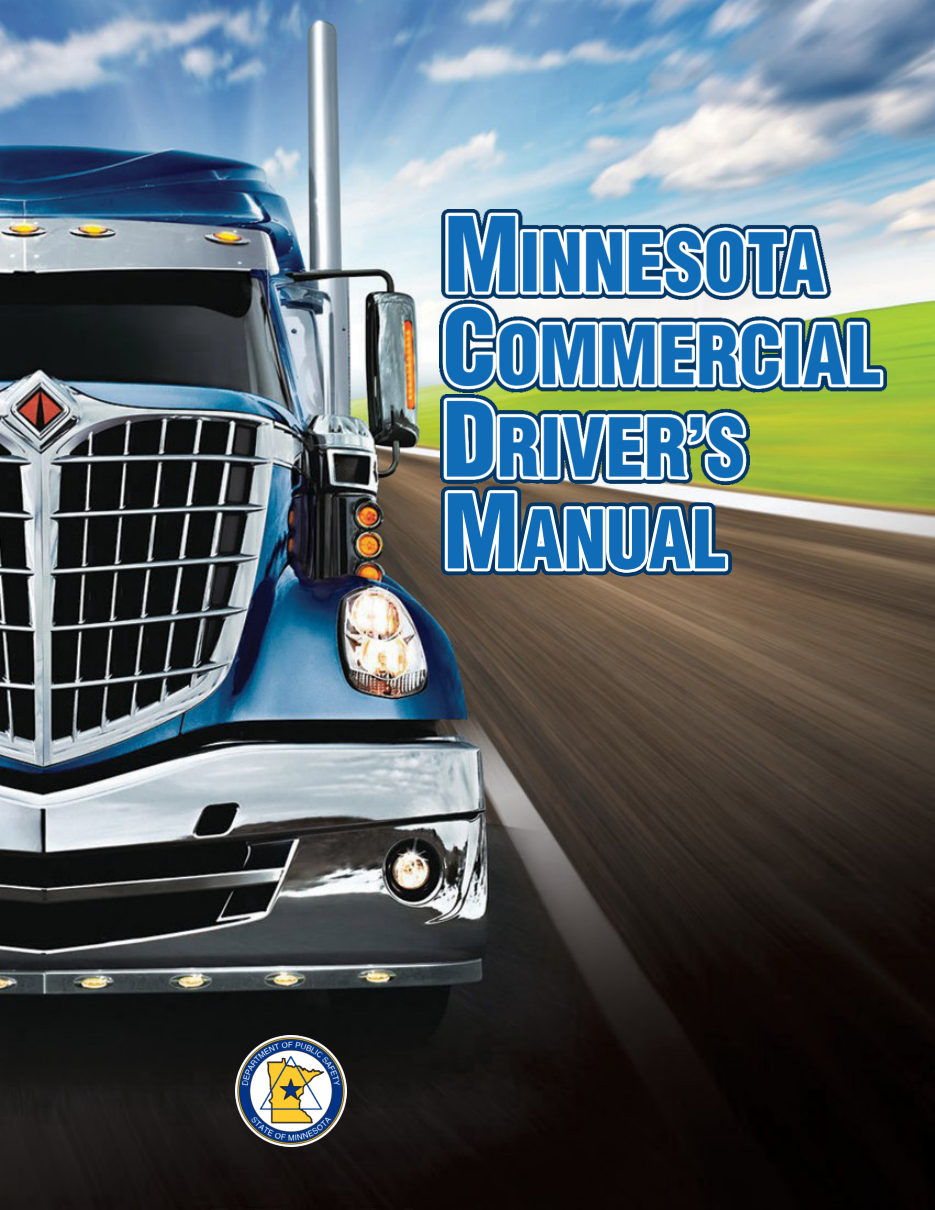
Your permit knowledge tests come from this manual, published by Minnesota DPS Driver and Vehicle Services. Read it right here on the page, or download the PDF to keep on your phone or computer.
Read the manual hereDownload the PDF
Our copy was downloaded from the state on October 14, 2026. The state's own file is always at its official manual link, and the state CDL page lists the newest edition. Link checked October 4, 2026.
Getting a CDL in Minnesota
| Licensing agency | Driver and Vehicle Services (DVS), a division of the Minnesota Department of Public Safety, issues commercial learner's permits and CDLs.[1][2] |
|---|---|
| Official CDL manual | Minnesota Commercial Driver's License Manual (PDF). If that link moves, use the DVS CDL forms, documents and resources page, which also has the manual as audio files.[2][3] |
| Minimum age | 18 for a Minnesota commercial learner's permit and CDL, which covers driving inside the state. You must be 21 to drive commercially outside Minnesota. The manual says that in most cases you must also be 21 to haul hazardous materials.[4][2][5] |
| Before the permit | You need a valid Minnesota driver's license, proof of U.S. citizenship or lawful permanent residency, and proof of Minnesota residency. You can try each knowledge test once a day.[4][2] |
| Wait after the permit | You must hold the permit for 14 calendar days before the road test.[4][2] |
| How long the permit lasts | 180 days. It can be renewed, but not past one year from the day it was first issued.[2] |
| Road test | Three parts: vehicle inspection, basic control skills and the road test. You must pass each part to move on to the next, all on the same permit, and the test is given only in English.[6][2] |
| What to bring to the road test | Your Minnesota driver's license, your permit, completed ELDT on your federal record, current insurance for the vehicle, and a current DOT inspection on the truck and the trailer.[6] |
| If you fail or miss the test | The manual lists a $20 fee for the third and each later road test attempt, and says driver's training is required after a fourth failed road test. Missing a road test appointment, or not cancelling at least 24 hours ahead, adds a $20 no-show fee.[2] |
| How long the CDL lasts | A Class A CDL is valid for four years and can be renewed.[6] |
Minnesota CDL permit and license fees
These are the fees Minnesota DVS publishes for a commercial learner's permit, the tests and a CDL. Each row says who pays it. We list a fee only where the state names it and gives the amount. Checked October 5, 2026.
| Fee | Amount | Who pays it |
|---|---|---|
| Learner's permit and knowledge tests | ||
| Commercial learner's permitPaid at a driver exam station. DVS says a CDL holder moving up a class must also apply for a permit. | $26.75[7] | A first CDL and a CDL holder moving up a class |
| Endorsement examination fee$2.50 for each endorsement you apply for, paid at a driver exam station. | $2.50 for each endorsement[7] | Everyone |
| Commercial learner's permitAdding a passenger endorsement needs a road test, and DVS says a CDL holder taking a road test to add an endorsement must apply for a permit. | $26.75[7] | A CDL holder adding an endorsement: with Passenger |
| Commercial learner's permitAdding a school bus endorsement needs a road test, and DVS says a CDL holder taking a road test to add an endorsement must apply for a permit. | $26.75[7] | A CDL holder adding an endorsement: with School Bus; without Passenger |
| License | ||
| Class A CDLValid for four years. | $65.00[7] | A first CDL: Class A; 21 or older |
| Class A CDL, under age 21 | $45.00[7] | A first CDL: Class A; Under 21 |
| Class B CDLValid for four years. | $57.00[7] | A first CDL: Class B |
| Class C CDLValid for four years. | $50.00[7] | A first CDL: Class C |
| School bus processing feeCharged on original and renewal applications. It is added to the cost of the license. | $4.00[7] | A first CDL: with School Bus |
| Duplicate license with the new endorsementDVS says that to add endorsements to a CDL you already hold, you pass the tests and apply for a duplicate license. A duplicate keeps the same expiration date. | $26.00[7] | A CDL holder adding an endorsement |
Not in the table for a first CDL, because we could not confirm the amount from Minnesota DVS:
- The federal HazMat background check (TSA), if you add HazMat
Not in the table for a driver who already holds a CDL, because we could not confirm the amount from Minnesota DVS:
- The license fee for the higher class when you move up a class
- Whether the $4 school bus processing fee is charged when you add school bus to a CDL you already hold
- The federal HazMat background check (TSA), if you add HazMat
Renewal: DVS lists CDL renewal at $60 for Class A ($40 under age 21), $52 for Class B and $45 for Class C. DVS says a Class A, B or C CDL is valid for four years.[7]
- The third and each later road test, after failing the first two, is $20.[7]
- The third and each later written test, after failing the first two, is $10.[7]
- If you miss a road test or cancel less than 24 hours ahead, the fee is $40. Cancelling between 24 and 72 hours ahead is $20.[8]
- An enhanced driver's license adds $15 to the license fee.[7]
- A driver's license agent may add a convenience fee when you pay by credit or debit card.[9]
- DVS says there is a fee for the TSA threat assessment for HazMat and points to the TSA website for it.[10]
- A duplicate license keeps the same expiration date. A renewal extends it.[11]
Fees change. Confirm your total with Minnesota DVS before you go. Minnesota DVS sets these fees; Red River Valley CDL does not collect them.
Add up your Minnesota CDL costs
Getting your permit, your first CDL, adding endorsements, moving up a class or renewing: the CDL cost calculator adds up the Minnesota DVS fees above for your class and endorsements, with a source link on every line.
ELDT in Minnesota: what has to be done before you test
Entry-level driver training (ELDT) is a federal rule, so it works the same in Minnesota as in every other state. If you are getting a Class A or Class B CDL for the first time, upgrading to a Class A or B, or adding a passenger (P), school bus (S) or hazardous materials (H) endorsement for the first time, you have to complete training with a provider listed on FMCSA's Training Provider Registry (TPR).[13]
The state cannot give you the skills test for a Class A or B CDL or a P or S endorsement, or the knowledge test for the H endorsement, until that training is on record.[14] Theory can be done online: the federal definition of theory instruction includes online training.[15] Except for the HazMat endorsement, the theory and behind-the-wheel parts have to be finished within one year of each other.[16]
Minnesota follows the federal rule. DVS lists completing ELDT as a step in applying for a Class A CDL, and you must show completed ELDT to take the road test.[6] DVS says you can take the classroom (theory) part at any time. You cannot take the behind-the-wheel part until you have your learner's permit, and it has to be finished within a year of the theory.[4] The DVS information sheet on ELDT says training must come from a provider listed on the Training Provider Registry and that theory may be done in person or online.[12]
Truck driving jobs and pay in Minnesota
| Drivers employed (May 2025) | 38,770[17] |
|---|---|
| Median pay (May 2025) | $61,990 a year, or $29.80 an hour[17] |
| Average pay (May 2025) | $63,630 a year, or $30.59 an hour[17] |
| Projected jobs, 2024 to 2034 | 41,290 in 2024, growing to 42,670 in 2034 (up 3.4%)[18] |
| Projected openings each year, 2024 to 2034 | About 4,350 a year, counting new jobs and replacements[18] |
The wage figures are from the federal Occupational Employment and Wage Statistics survey. The projections come from Minnesota's own long-term forecast, published through Projections Central. The two sources give different job totals.
Truck rules on Minnesota roads
Size and weight limits
| Width | 102 inches (8 feet 6 inches). Mirrors and load securement devices that stick out no more than 3 inches on each side are not counted.[19] |
|---|---|
| Height | 13 feet 6 inches, loaded or empty[20] |
| Single vehicle length | 45 feet, including load and bumpers. Mobile cranes can be 48 feet.[20] |
| Semitrailer length | 48 feet. A single semitrailer can be up to 53 feet if the distance from the kingpin to the centerline of the rear axle group is no more than 43 feet.[20] |
| Doubles | Each trailer up to 28½ feet. Twin trailers may run only on divided highways with four or more lanes and on other highways the commissioner of transportation designates.[20] |
| Overall combination length | 75 feet statewide. A tractor and semitrailer longer than 75 feet may run only on divided highways with four or more lanes and other designated highways.[20] |
| Gross weight | 80,000 pounds for any vehicle or combination, unless the road is posted lower. Axle groups also have to fit the state's gross weight table.[21] |
| Single axle | 20,000 pounds on a paved road, 18,000 pounds on an unpaved road. No wheel may carry more than 10,000 pounds on a paved road or 9,000 on an unpaved road.[22] |
| Tandem axle | 34,000 pounds. Two sets of tandems can carry 34,000 pounds each when the first and last axles of the two sets are at least 36 feet apart.[21][23] |
| Tire load | 600 pounds per inch of tire width on the steering axles and 500 pounds per inch on other axles, or the tire maker's rated load if that is less[22] |
The trucking summary inside the DVS CDL manual still shows 40 feet for a single vehicle. The statute, MnDOT and the State Patrol all say 45 feet. This page follows the statute.
Longer combination vehicles
Minnesota has no grandfathered longer combinations on the federal list. Appendix C to the federal size and weight rule shows "NO" for Minnesota in every column.[24] State law limits a combination to two units, with exceptions listed in the statute. One of them is a truck-tractor and semitrailer pulling one more semitrailer or one full trailer, which may run only on divided highways with four or more lanes and other designated highways.[20]
Truck speed limits
The limits in Minnesota's speed statute are 70 mph on Interstates outside urbanized areas of more than 50,000 people, 65 mph on Interstates inside those areas, 65 mph on other expressways and freeways, 30 mph in an urban district, and 55 mph everywhere else. MnDOT can post a different limit on a state highway after a traffic study.[25]
Winter restrictions and chains
Minnesota law allows tire chains of reasonable size on any vehicle when they are needed for safety because of snow, ice or other slippery conditions. Studded tires are generally not allowed. A vehicle registered in a state that allows studs can use them in Minnesota only while it is in the state occasionally, which the law caps at 30 days in any six months.[26]
Seasonal and posted roads
Minnesota's weight limits change with the season. MnDOT splits the state into six seasonal load limit zones: North, North-Central, Central, Metro, South and Southeast. Each zone gets its own start and end dates every year.[27]
- Winter load increases: while the ground is frozen, state law raises the weight limits by 10 percent between the dates the commissioner sets for each zone. On Interstate routes you still need a permit to go over 80,000 pounds gross, 20,000 pounds on a single axle or the normal axle group weights.[28] For the 2025 to 2026 winter the increases started December 12 to December 29, 2025 and ended February 24 to March 20, 2026, depending on the zone.[27]
- Spring load restrictions: between the dates the commissioner sets, a single axle may not carry more than 5 tons on an unpaved road or 10 tons on a paved road, unless the road is posted otherwise.[29] On state highways, MnDOT's map shows which routes drop to 5 or 7 tons. State, U.S. and Interstate highways not shown as restricted stay at 10 tons.[30] In 2026 the restrictions began March 3 in the Metro, South and Southeast zones and ended May 15 in the North zone.[27]
- How dates are announced: every start and end date takes effect at 12:01 a.m. and comes with at least three days' notice. MnDOT posts the dates on its website, on a recording at 651-366-5400 or 1-800-723-6543, and by email to subscribers.[27]
- County, city and township roads: MnDOT's dates and maps cover state highways. Local road authorities can post their own limits, and a posting takes effect once the signs are up. Check with the county, city or township.[29][30]
Check the MnDOT seasonal load limits page for current dates and the MnDOT seasonal load limit maps for restricted routes.
HazMat routes and tunnels
The federal hazardous materials route registry lists one restricted route for Minnesota. The Lowry Hill Tunnel on I-94 is closed to every load that requires the vehicle to be marked or placarded. The entry dates from 1995 and tells placarded trucks to follow the signed HazMat truck routes around the tunnel.[31] MnDOT's 2026 commercial vehicle resource book repeats the rule and places the tunnel near downtown Minneapolis.[23]
Check the FMCSA hazardous materials route registry by state before you route a load.
Tolls and transponders
MnDOT lists E-ZPass express lanes on I-394 between Wayzata and Minneapolis, on I-35W, and on I-35E between St. Paul and White Bear Lake.[32] They are priced only during weekday peak hours, 6 to 10 a.m. and 3 to 7 p.m. depending on the route and direction. Fees for solo drivers run from $0.25 to $8.00 and are paid from a prepaid E-ZPass account.[33]
For trucks, MnDOT says large commercial vehicles with more than two axles and weighing more than 26,000 pounds are discouraged from using the E-ZPass lanes during peak hours and will not be given a tag. Outside peak hours, when the overhead signs read OPEN TO ALL TRAFFIC, all commercial vehicles can use the lanes at no charge.[34]
Fuel tax (IFTA)
| IFTA diesel rate, 4th quarter 2026 | $0.326 per gallon. The Minnesota Department of Revenue lists $0.326 for clear diesel through December 31, 2026 and $0.328 beginning January 1, 2027.[35][36] |
|---|---|
| Who handles it | The Prorate Office at Driver and Vehicle Services handles IRP and IFTA. Under IFTA you file one quarterly fuel tax return with your base jurisdiction, and it covers every member jurisdiction.[37][23] |
| License and decals | $28 annual fuel license fee, $12 annual filing fee and $2.50 per vehicle for decals. One decal goes on each side of the cab. The license and decals are good for the calendar year.[23] |
IFTA rates can change every quarter. The 4th quarter 2026 matrix was marked not final until December 4, 2026 when this page was checked.
Oversize and overweight permits
MnDOT issues oversize and overweight permits for state highways as single trip, annual or seasonal permits. You order them through MnDOT's online permit system at mn.gotpermits.com, or call the permit office at 651-296-6000.[38][39] A MnDOT permit is not valid on county, city, township or other local roads, so check with the local road authority for those.[40] Start at MnDOT's oversize and overweight permits page, which also links the holiday travel schedule and Twin Cities rush hour zones.[38]
Truck parking
MnDOT runs rest areas with truck parking across the state, but it says more than 85 percent of truck parking in Minnesota is privately owned, at truck stops, shippers and carriers. Live truck parking availability and locations are on the 511mn traveler information site. Minnesota is one of several states in the regional Truck Parking Information Management System, which reports real-time parking availability at rest areas.[41]
A commercial driver under the hours-of-service rules can park for up to ten hours straight at any MnDOT rest area or travel information center that has stalls built for commercial vehicles. Other motorists are limited to four hours where posted.[42]
Weigh stations
MnDOT owns the weigh stations and the State Patrol's commercial vehicle enforcement staff run them. MnDOT lists six: Dayton Port on US 10 at Elk River, Erskine on US 2, Red River at Moorhead, Saginaw on Highway 2, St. Croix on Hudson Boulevard, and Worthington.[43] The State Patrol's page also names Clarks Grove, and says all of its commercial vehicle enforcement staff carry portable scales for roadside weighing anywhere in the state.[39]
When signs are posted for a weight enforcement operation, the driver of a truck or combination registered for more than 10,000 pounds must go to the scale and submit to weighing and inspection. Refusing is a misdemeanor.[44]
Help paying for CDL training in Minnesota
The Minnesota Department of Employment and Economic Development (DEED) keeps the state's Eligible Training Provider List (ETPL) for Workforce Innovation and Opportunity Act (WIOA) training. The list is built into DEED's Career and Education Explorer, where programs marked WIOA-certified make up the ETPL.[45]
You can look through it with the Career and Education Explorer training search. It has a keyword search and a full list of WIOA-certified training.[46]
To ask about funding, contact your local CareerForce location. DEED's search page says to check with CareerForce about eligibility, and the CareerForce location finder lists offices across the state.[46][47] Ask three things: whether you qualify for WIOA training funds, which CDL programs on the list they will pay for, and what paperwork they need before you enroll. Get the answer before you pay a school.
Veterans and military drivers in Minnesota
Minnesota military CDL test waivers
Federal rules let a state waive CDL tests for drivers with military commercial vehicle experience.[48] Minnesota offers both waivers. The skills test waiver lets you skip the road test if you held a military license to drive a comparable commercial vehicle for at least two years with a safe driving record. You have to apply within 12 months before or after your separation date.[49] DVS lists a two-year waiver period from July 30 to October 29, 2026. During it, current and former service members may apply within two years of qualifying military employment. After October 29, 2026 the period goes back to 12 months.[50]
The knowledge test waiver is the Even Exchange Program. It is open to listed military driving jobs, including Army 88M, 92F and 14T, Marine Corps 3531, Navy EO, and the Air Force vehicle operator, fueler, and pavement and construction equipment operator specialties. You show a DD-214 or other military document with your job specialty.[50][49]
You apply in person with the Military skills test waiver application, form PS30320 (PDF), signed by your commanding officer. Bring a copy of your military driver's license, a leave and earnings statement or DD-214 showing your separation date, your military ID, and proof of Minnesota residency. DVS's CDL page for military service members lists the steps.[50][49]
GI Bill and VR&E
If you plan to use VA education benefits, check the school first. The VA's GI Bill Comparison Tool lets you look up schools and training programs.[51] Veterans with a service-connected disability can also ask about Veteran Readiness and Employment (Chapter 31).[52] Ask any school whether it is approved for VA benefits before you enroll.
Behind-the-wheel training in Minnesota
For a CDL, passenger or school bus endorsement, theory is only half of ELDT. The range and road training has to be done in a truck or bus with a behind-the-wheel provider that is also listed on the Training Provider Registry.[13] The HazMat endorsement is theory only.[53]
To find one near you, use the FMCSA Training Provider Registry provider search: pick the license or endorsement, choose Behind-the-Wheel, and enter your location.[53] You can take theory from one provider and behind-the-wheel from another.
Behind-the-wheel training in Glyndon, Minnesota
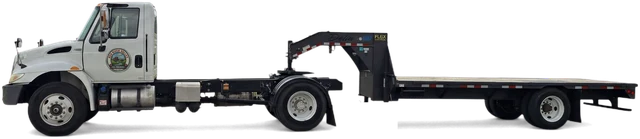
Red River Valley CDL Training is just east of Moorhead and Fargo. Minnesota students can train with us here in our truck, or Carl can come to Minnesota and train you in your own truck, with travel fees. Your permit, tests and CDL come from Minnesota DVS.
Check your Training Provider Registry record
When you finish a course, your training provider has until midnight of the second business day to send your completion to the Training Provider Registry.[54]
You can look it up yourself with FMCSA's Check Your Record tool on the Training Provider Registry. Enter your license or permit number and state, your date of birth, and your first and last name exactly as they appear on your license or permit.[55]
Minnesota CDL questions
How old do you have to be to get a CDL in Minnesota?
You can get a Minnesota commercial learner's permit and CDL at 18, which lets you drive commercially inside the state. You have to be 21 to drive commercially outside Minnesota.[4][2][5]
How long do I have to hold my Minnesota CDL permit before the road test?
Fourteen calendar days. The permit itself is good for 180 days and can be renewed, but not past one year from the day it was first issued.[4][2]
Can I do my ELDT theory online for a Minnesota CDL?
Yes. ELDT is a federal requirement and Minnesota follows it. The theory has to come from a provider listed on FMCSA's Training Provider Registry, and the federal definition of theory instruction includes online training. Minnesota says you can take the theory at any time, but behind-the-wheel training has to wait until you have your learner's permit.[4][12][15][13]
When are spring load restrictions in Minnesota?
The dates change every year and by zone. MnDOT sets them for six seasonal load limit zones and gives at least three days' notice on its seasonal load limits page and by phone recording. In 2026 the restrictions began March 3 in the Metro, South and Southeast zones and ended May 15 in the North zone.[27]
Can a placarded HazMat truck use the Lowry Hill Tunnel in Minneapolis?
No. The federal route registry lists the Lowry Hill Tunnel on I-94 as restricted for all hazardous materials that require the vehicle to be marked or placarded. Placarded trucks follow the signed HazMat truck routes around the tunnel.[31][23]
Other state guides
Researching another state? ELDT.Courses keeps sourced guides for all 50 states and DC at eldt.courses/states.
Where these facts come from
Every fact on this page comes from an official source that was opened and read on the date shown. Click a source to read it yourself. Rules, fees, rates and wages change, so check the source before you rely on a number.
- Minnesota Department of Public Safety, Driver and Vehicle Services. Commercial driver's license (CDL). Checked October 4, 2026.
- Minnesota Department of Public Safety, Driver and Vehicle Services. Minnesota Commercial Driver's License (CDL) Manual. Checked October 4, 2026.
- Minnesota Department of Public Safety, Driver and Vehicle Services. CDL forms, documents and resources. Checked October 4, 2026.
- Minnesota Department of Public Safety, Driver and Vehicle Services. Commercial learner's permit (CLP). Checked October 4, 2026.
- eCFR. 49 CFR 391.11, General qualifications of drivers. Checked October 4, 2026.
- Minnesota Department of Public Safety, Driver and Vehicle Services. CDL Class A. Checked October 4, 2026.
- Minnesota Department of Public Safety, Driver and Vehicle Services. Driver's license and ID card fees. Checked October 5, 2026.
- Minnesota Office of the Revisor of Statutes. 2025 Minnesota Statutes, section 171.13, Examination. Checked October 5, 2026.
- Minnesota Office of the Revisor of Statutes. 2025 Minnesota Statutes, section 171.061, Driver's license agents. Checked October 5, 2026.
- Minnesota Department of Public Safety, Driver and Vehicle Services. CDL hazardous materials endorsement. Checked October 5, 2026.
- Minnesota Department of Public Safety, Driver and Vehicle Services. Get a duplicate license or ID card. Checked October 5, 2026.
- Minnesota Department of Public Safety, Driver and Vehicle Services. Entry-Level Driver Training (ELDT) Compliance Date and Training Provider Registry Launch (information sheet linked from the DVS CDL resources page). Checked October 4, 2026.
- eCFR. 49 CFR 380.609, General entry-level driver training requirements. Checked October 4, 2026.
- eCFR. 49 CFR 383.73, State procedures. Checked October 4, 2026.
- eCFR. 49 CFR 380.605, Definitions (theory instruction). Checked October 4, 2026.
- eCFR. 49 CFR 380.603, Applicability (entry-level driver training). Checked October 4, 2026.
- U.S. Bureau of Labor Statistics. Occupational Employment and Wage Statistics, Minnesota, May 2025. Checked October 4, 2026.
- Projections Central (Projections Managing Partnership). Long-Term Occupational Projections (2024-2034). Checked October 4, 2026.
- Minnesota Office of the Revisor of Statutes. Minnesota Statutes, section 169.80, Size, weight, load. Checked October 4, 2026.
- Minnesota Office of the Revisor of Statutes. Minnesota Statutes, section 169.81, Height and length limitations. Checked October 4, 2026.
- Minnesota Office of the Revisor of Statutes. Minnesota Statutes, section 169.824, Gross weight schedule. Checked October 4, 2026.
- Minnesota Office of the Revisor of Statutes. Minnesota Statutes, section 169.823, Tire weight limits. Checked October 4, 2026.
- Minnesota Department of Transportation, Office of Freight and Commercial Vehicle Operations. Minnesota Commercial Vehicle Resource Book 2026. Checked October 4, 2026.
- eCFR. 23 CFR Part 658, Truck size and weight, route designations (including Appendix C). Checked October 4, 2026.
- Minnesota Office of the Revisor of Statutes. Minnesota Statutes, section 169.14, Speed limits, zones; radar. Checked October 4, 2026.
- Minnesota Office of the Revisor of Statutes. Minnesota Statutes, section 169.72, Tire surface; metal studs. Checked October 4, 2026.
- Minnesota Department of Transportation. Seasonal Load Limits: Start and End Dates. Checked October 4, 2026.
- Minnesota Office of the Revisor of Statutes. Minnesota Statutes, section 169.826, Gross weight seasonal increases. Checked October 4, 2026.
- Minnesota Office of the Revisor of Statutes. Minnesota Statutes, section 169.87, Seasonal load restriction; route designation. Checked October 4, 2026.
- Minnesota Department of Transportation. Seasonal Load Limits: Maps. Checked October 4, 2026.
- FMCSA. National Hazardous Materials Route Registry: Minnesota (April 2024). Checked October 4, 2026.
- Minnesota Department of Transportation. E-ZPass Express Lanes. Checked October 4, 2026.
- Minnesota Department of Transportation. E-ZPass: How it works. Checked October 4, 2026.
- Minnesota Department of Transportation. E-ZPass: Driving in the E-ZPass lane. Checked October 4, 2026.
- IFTA, Inc.. IFTA Tax Matrix, 4th Quarter 2026 Fuel Tax Rates. Checked October 4, 2026.
- Minnesota Department of Revenue. Petroleum Tax Fuel Excise Tax Rates and Fees. Checked October 4, 2026.
- Minnesota Department of Public Safety, Driver and Vehicle Services. IRP and IFTA. Checked October 4, 2026.
- Minnesota Department of Transportation. Minnesota Oversize/Overweight Permits. Checked October 4, 2026.
- Minnesota State Patrol. Commercial vehicles: Vehicle size and weight. Checked October 4, 2026.
- Minnesota Department of Transportation. Oversize/Overweight Permits: Find out if you need a permit. Checked October 4, 2026.
- Minnesota Department of Transportation. Truck Parking in Minnesota. Checked October 4, 2026.
- Minnesota Department of Transportation. Safety Rest Areas and Waysides: Governances (laws, policies and common practices). Checked October 4, 2026.
- Minnesota Department of Transportation. Weigh stations in Minnesota. Checked October 4, 2026.
- Minnesota Office of the Revisor of Statutes. Minnesota Statutes, section 169.85, Weighing; penalty. Checked October 4, 2026.
- Minnesota Department of Employment and Economic Development. Eligible Training Provider List and WIOA Certification for Training Programs (policy). Checked October 4, 2026.
- Minnesota Department of Employment and Economic Development. Career and Education Explorer (Minnesota's Eligible Training Provider List). Checked October 4, 2026.
- CareerForce (Minnesota Department of Employment and Economic Development). CareerForce Locations. Checked October 4, 2026.
- eCFR. 49 CFR 383.77, Substitute for knowledge and driving skills tests for drivers with military CMV experience. Checked October 4, 2026.
- Minnesota Department of Public Safety, Driver and Vehicle Services. Military skills test waiver application, PS30320-04 (8/26). Checked October 4, 2026.
- Minnesota Department of Public Safety, Driver and Vehicle Services. CDL Class A or B for military service members. Checked October 4, 2026.
- U.S. Department of Veterans Affairs. GI Bill Comparison Tool. Checked October 4, 2026.
- U.S. Department of Veterans Affairs. Veteran Readiness and Employment (Chapter 31). Checked October 4, 2026.
- FMCSA. Training Provider Registry: Find a Provider. Checked October 4, 2026.
- eCFR. 49 CFR 380.717, Training certification. Checked October 4, 2026.
- FMCSA. Training Provider Registry: Check Your Record. Checked October 4, 2026.
Last verified October 4, 2026. General information, not legal advice. State research by ELDT.Courses.